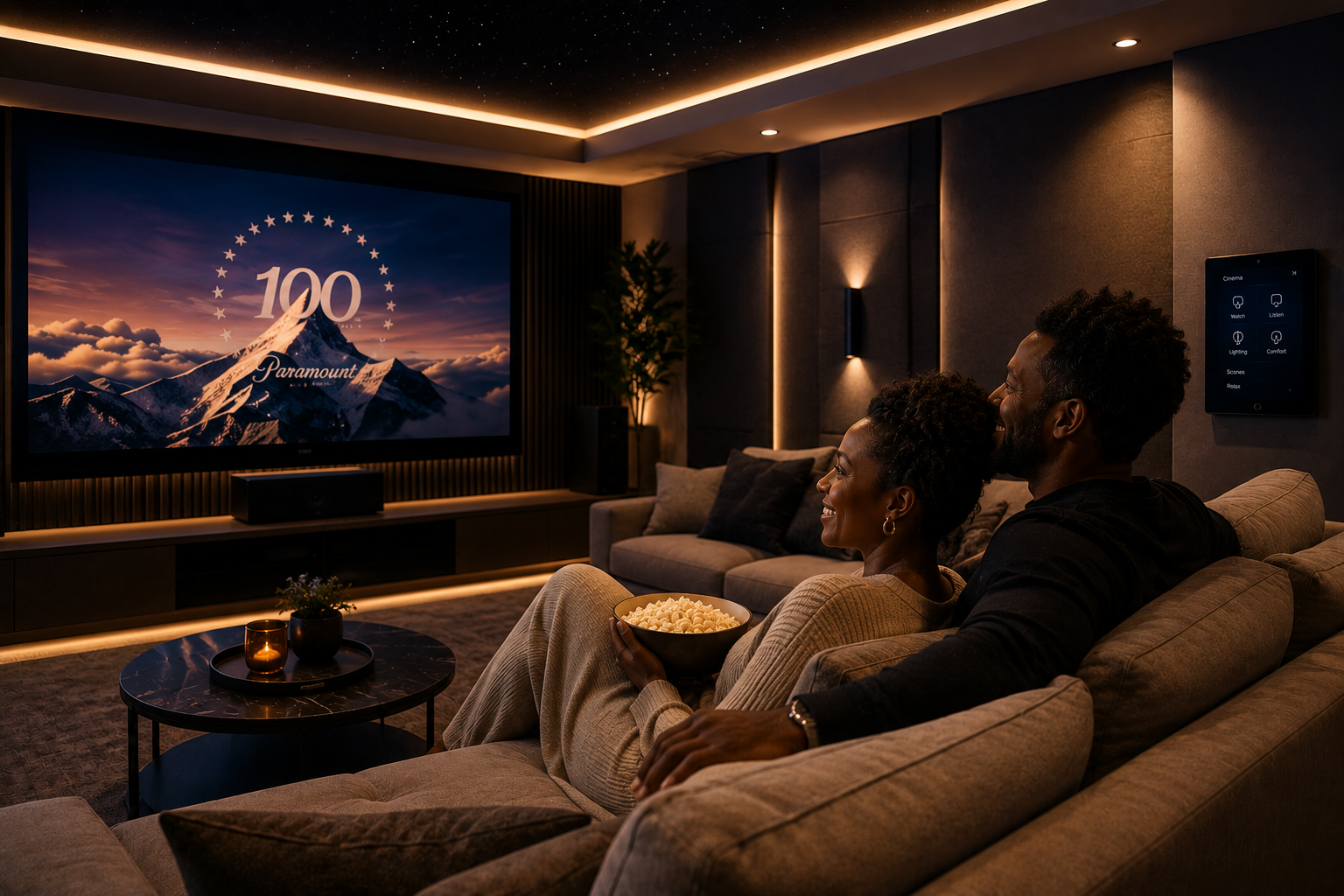
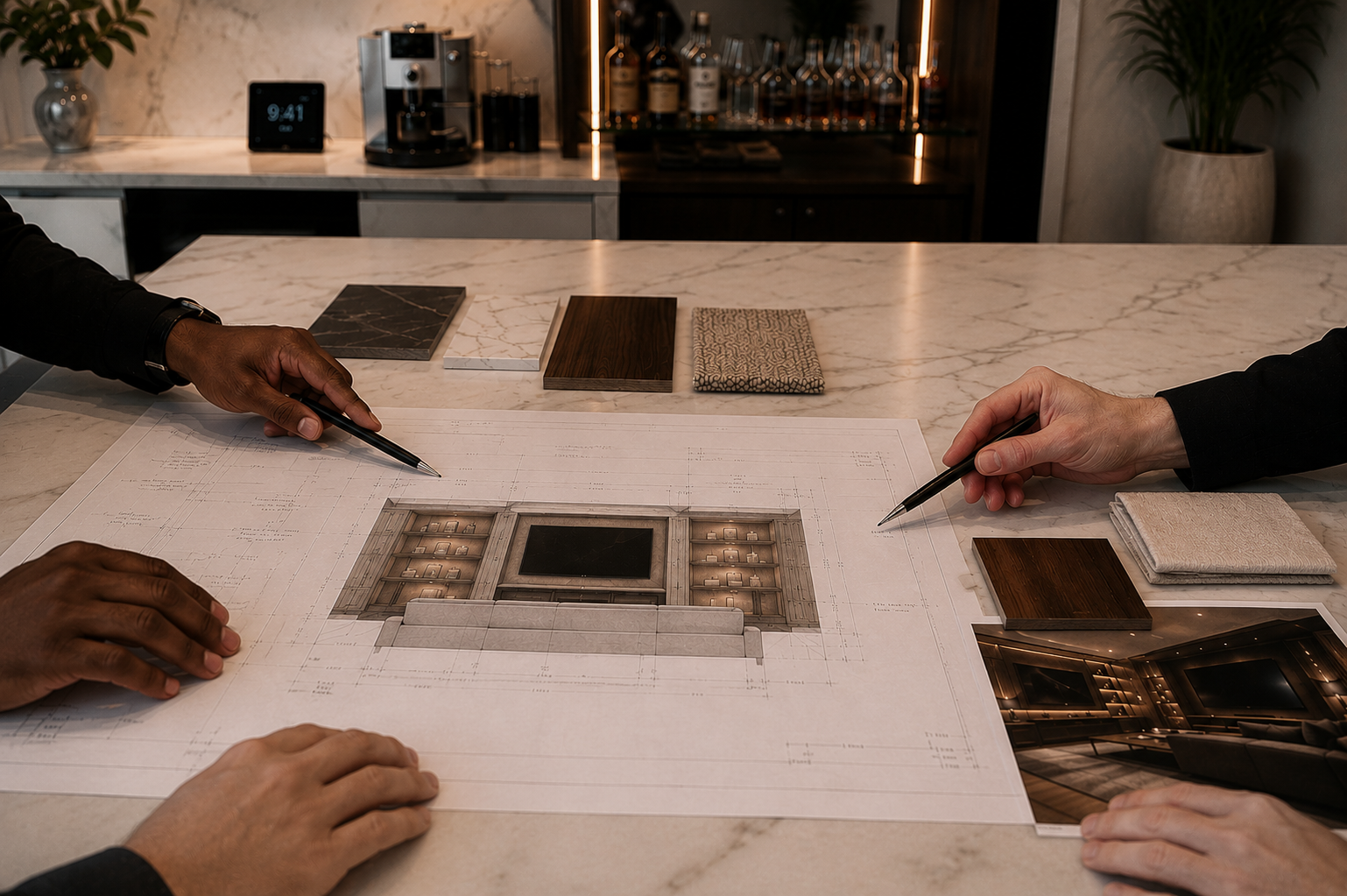
The most successful smart homes aren’t defined by the technology inside them, they’re defined by how effortlessly that technology disappears into the design. That level of refinement doesn’t happen by accident. It’s the result of early, intentional collaboration between architects, interior designers, and smart home specialists.
- Great Design Depends on Invisible Technology
Clients don’t want to see cables, bulky equipment, or mismatched control panels. They want clean lines, considered spaces, and a home that feels intentional.
Achieving that requires planning for:
- In-ceiling or invisible speakers
- Flush-mounted displays and TVs
- Discreet keypads or touch interfaces
- Hidden AV and automation racks
These elements must be designed into the architecture and interior layout, not later.
- Lighting Design and Control Must Work Together
Lighting is one of the most powerful tools in any space and one of the most commonly compromised when smart control is added too late.
Collaboration ensures:
- Layered lighting schemes (ambient, task, accent) are preserved
- Control systems enhance, not override, the design
- Scenes are created that match how the space is actually used
- Better Planning = Better Client Experience
At the centre of every project is the client and their experience of the space.
When design and technology are aligned the home feels intuitive, systems respond naturally to daily routine and there is a sense of effortlessness in how everything works
When they’re not controls feel confusing, systems operate independently and the home loses that sense of cohesion
- Each Specialist Brings a Critical Perspective
No single discipline can deliver a fully integrated smart home on its own. Architects define the spatial intent and structure, interior designers shape how the home looks and feels, and smart home specialists ensure the technology seamlessly supports both. When these roles collaborate from the outset, technical requirements are thoughtfully built into the design, aesthetic decisions naturally account for technology, and the final result feels cohesive and intentional rather than layered or added on.
The difference between a “smart house” and a truly intelligent home lies in how well technology and design are integrated. That integration doesn’t happen at the end of a project, it happens at the beginning.
If you’re an architect or interior designer, we partner with you from the early planning stages to ensure technology enhances your vision, not compromises it.
Let’s collaborate to create homes where design and technology work as one.